


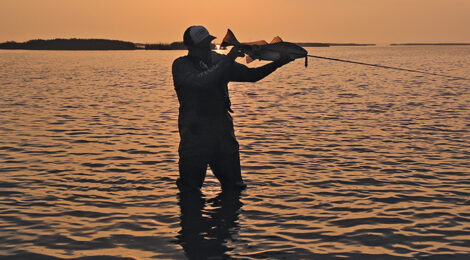
Spring Into The Skinny Shallows
Spring is an excellent time to fish some unbelievably shallow water.
Story and photography by Danno Wise
For coastal anglers, spring is notorious for high water and high winds. Given does a bull tide may push as much as a couple extra feet of water into Texas bays. So, does this mean inshore anglers in the Lone Star State are stuck fishing deep water during the spring season? Not at all. In fact, spring is an excellent time to fish in some unbelievably shallow water.
Although they may find some of their favorite fishing spots substantially deeper beneath the surface, there will also be countless acres that were either inches deep or bone-dry during winter now hold enough water for fish to swim. And swim in it they will.
Fish will be so anxious to feed on the newly flooded flats that it is not uncommon to find them in water so shallow it doesn’t even cover their backs. As a result, over the next month or so, anglers can find productive water that is anywhere from a few inches to two feet deep. These super shallow flats will not only be holding good numbers of fish, but some truly impressive specimens as well.
There is yet another reason these super shallow waters will be so productive over the next couple months. As spring gets underway, water temperatures begin rapidly rising. These warming waters will be inviting for speckled trout and redfish, both of which will begin spending more time in the shallows over the next few weeks. Unlike the summer months, when fish are only in the shallows until the sweltering sun makes the water unbearably hot, fish will often remain on the flats throughout the entire day during spring. They will also be willing to stray much further from the safety of deeper water than they are during either summer or winter.
However, knowing the depth they will likely be in is one thing. Finding and catching them can be quite another. For starters, anglers need to keep in mind the “shallows” will literally be shifting with the tides during spring. Additionally, much of the flats which become flooded during a high tide event may be difficult to access or cast in – areas such as flooded mangroves or grass, as well as expansive flats that may lie beyond the regular shoreline of the bay.
************************************************************************
To read more, click here to SUBSCRIBE