

Tips to Dove Hunting Success
Story by Bill L. Olson
Successful dove hunts include reading new fields. Dove typically identifies and uses various natural landmarks when flying over or through new or familiar terrain.
Some of the corridors dove hunters should consider hunting include near include gates or gaps, breaks in vegetation along a fence row, gravel or caliche roads and isolated tall trees. These provide flight openings, lookout posts as well as places to land to observe an area before dropping to the ground to water or feed.
Watch dove sitting on a power line. It could be a roost or more likely just a staging area birds fly too before dropping to the ground. Figure out where they came from and where they go.
As the day progresses don’t be afraid to reposition your location should action slow. Just make sure anyone you are hunting with or near are aware of the move.
Water is a critical attractant for the fast-flying gray palomas. The shallow shoreline on the upper end of stock tanks provides a good landing area where birds can easily access water plus pick up grit for their craw.
Being aware of natural or planted dove feed like native sunflowers or crops like milo or hay grazer are good attractant. Croton becomes an attractive seed when the pods pop open as the season progresses.
Figure out where the food is in relation to the water and roost areas. The combination of all three will result in a pattern dove use on a regular or even daily basis.
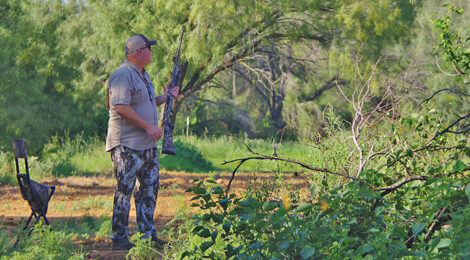
On windy days when dove tend to stay on the ground and fly less try walking them up. Solo or with a couple of buddies in a skirmish line walk into the wind. This means when a dove flushes from the ground with the wind behind them will create a slightly delay flight to wing. It also is a less attractive escape option for the dove that creates a going away shot into the wind.
************************************************************************
To read more, click here to SUBSCRIBE